
Where Fulton County Crime News Appears
Fulton County has no single newspaper arrest roll. The Atlanta News First crime section is one of the strongest broad sources. So are the Atlanta Journal-Constitution, WSB-TV, FOX 5 Atlanta, 11Alive, Rough Draft Atlanta, Appen Media, and Patch. All run selected public-safety stories. A metro newsroom may cover crime around the clock. A north-Fulton paper might publish once a week. Big events draw their own bursts of attention. The Atlanta Police Department, the Fulton County Sheriff's Office, and other agencies also put out selective releases.
Photos in the news are editorial choices. Some come from police. Some come from a scene. Others carry no image at all. A headline naming Atlanta, South Fulton, or Sandy Springs does not prove where the person is held. A story's city tag and a booking's detention location are two different facts.
Want the official picture? Use the FCSO inmate search and the public booking dataset. The live roster covers current custody and refreshes once daily. The dataset reaches back to 2014. It has no documented name or photo field, though. News adds context. It replaces neither system.
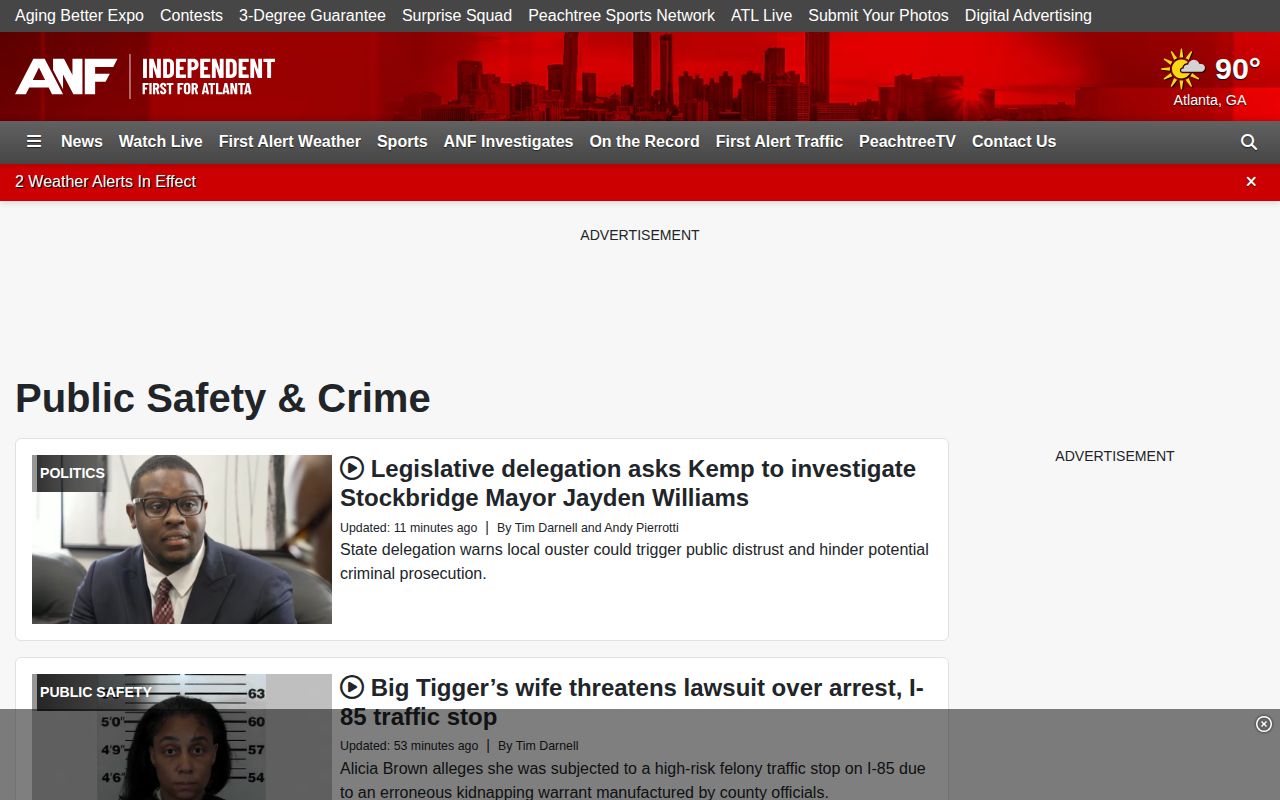
The screen shows a news stream, not a complete Fulton booking feed.
Fulton Crime News Outlet Table
Every outlet works from a different scope and photo policy. Official agencies come first in the table because they sit closest to the originating record; news outlets and aggregators follow as selective or unofficial sources.
| Outlet | Coverage and cadence | Photos and source |
|---|---|---|
| Fulton County Sheriff's Office | Wanted notices, public-safety releases, and selective social posts. | Official notices may carry identification photos. Not a complete news or booking roll. |
| Atlanta Journal-Constitution | Continuous metro crime and public-safety reporting, often several stories daily. | Editorial images, agency material, warrants, court filings, interviews, and staff reporting. |
| Atlanta News First | Broadcast and digital crime section updated through the day. | May include agency-supplied suspect or booking images. Incident-driven, not complete. |
| WSB-TV | Frequent Fulton news across Atlanta and the mapped cities. | Occasional official mugshot, interview, release, or court image. |
| FOX 5 Atlanta | Repeated county and city updates, with selective event coverage. | Often describes the source and may show an agency image. |
| 11Alive | Continuous metro crime stream, filtered by location when possible. | Agency, warrant, court, interview, and field reporting images. |
| Rough Draft Atlanta | Hyperlocal Atlanta and Sandy Springs public-safety context. | Mostly editorial, scene, or agency images. The Sandy Springs blotter is old and partial. |
| Appen Media | Weekly north-Fulton papers with digital public-safety updates. | Police records, open-records work, releases, and interviews. No complete mugshot roll. |
| Patch Atlanta Police & Fire | Event-driven Atlanta coverage. | Article-specific sourcing, not a county booking archive. |
FOX 5's Fulton tag offers a handy county-filtered view. Just remember that a tag still blends major events with everyday public-safety items.
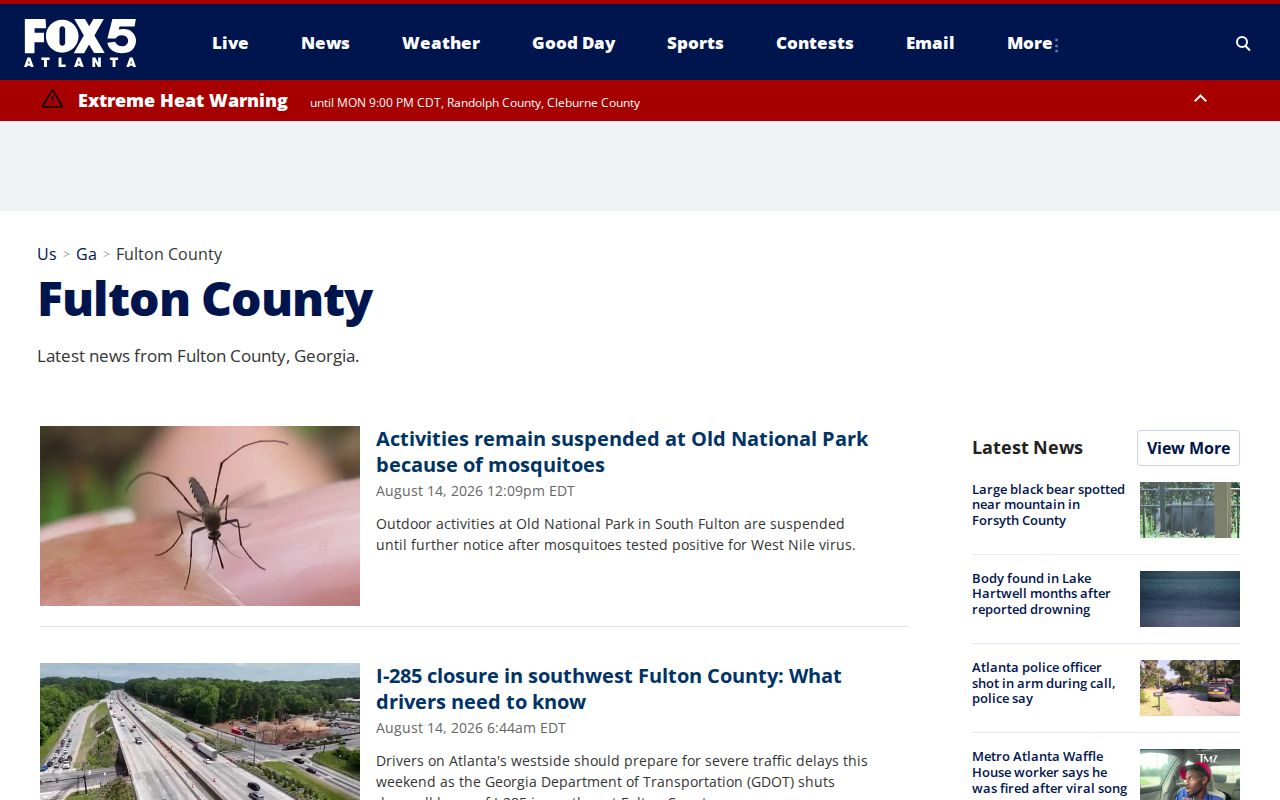
A county news tag helps you find a story. It cannot confirm that anyone named there is still in Fulton custody.
How Fulton Booking Photos Reach News
Georgia law shapes how booking photos move. O.C.G.A. § 35-1-19 generally limits what agencies can post on their websites and places conditions on some releases. A newsroom may get an image through an agency statement, a lawful records request, or its own reporting. A face in a story tells you nothing about which route was used.
FCSO's photo-request process rests on a statutory affirmation. The requester identifies the booking and signs that the image will not be pulled from publication for money or other consideration. That requirement covers the request described by the form. It does not open every photo to the public, and it does not force any newsroom to run one.
Outlets can also decline to publish. A story may lean on court papers, a police release, witness interviews, or a scene photograph instead. A story with no image does not mean no booking photo exists. Likewise, a face on an unofficial page does not prove the image is current or correctly matched.
The Georgia Attorney General's mugshot-law explanation gives the official law behind these publication limits.
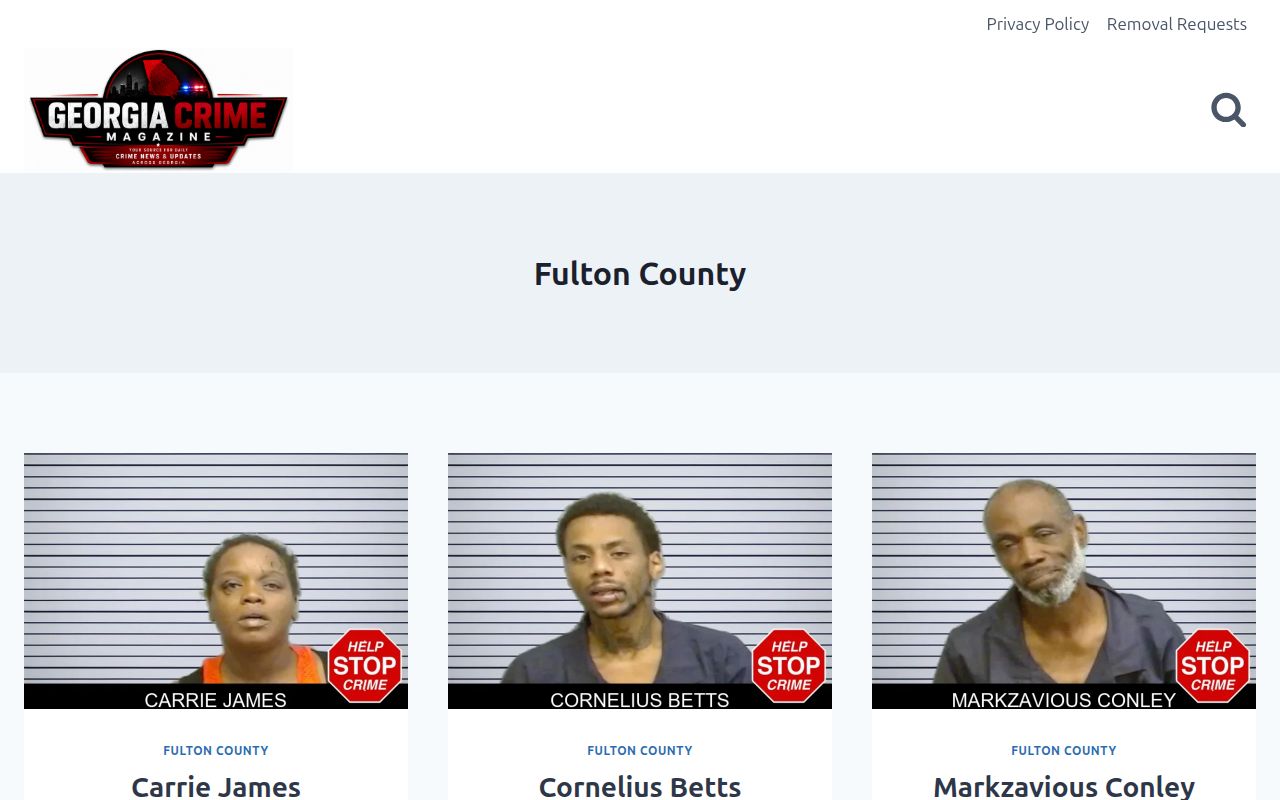
Georgia Crime Magazine or Georgia Gazette works as an aggregator here, not a complete reported newspaper record.
From a Fulton Story to the Record
A story gives you a lead. The official record gives you custody and case status. When a news report names an arrest or shows an image, follow this sequence.
- Save the story date, person's name, agency, location, and the exact charge. Do not copy a headline as if it were a disposition.
- Check the FCSO roster for present Fulton Sheriff custody. Remember that the database updates once daily and may not include a person released between snapshots.
- Use the public booking dataset for date windows, delivering agency, facility, and release fields. It has no documented name or photo field.
- Request the named booking record or photo from FCSO when the person is released or the web result is incomplete.
- Search the Fulton Clerk Magistrate/State or Superior portal for the filed case and later disposition.
The filed court disposition is what tells you what happened after the arrest. Charges can be reduced or dropped as a case moves, and that paper trail outlasts any headline.
The county-wide Fulton booking and records path pulls together the roster, dataset, request form, court portal, and custody boundaries in one place.
Unofficial Fulton Busted Mugshot Pages
Several third-party publishers keep Fulton-local sections. Treat them as secondary leads only. Their pages may be delayed, incomplete, duplicated, wrongly geocoded, or stale after a release or disposition. Every lookup should start with official sources.
Busted Newspaper's Fulton page shows paginated booking cards with names, descriptors, booking times, charges, and sometimes bond. Recently Booked's Fulton page claims coverage of the most recent 30 days and refreshes several times daily, yet it also admits Fulton does not supply mugshot images. That provenance conflict alone is a reason to verify every card.
Mugshots.com's Fulton archive is a large historical directory broken into city subdivisions, not a present-custody source. Georgia Crime Magazine or Georgia Gazette posts Fulton booking cards in daily batches. Arrests.org and Mugshots.zone offer no readable, verifiable Fulton-local section. No paid removal service is named or recommended here.
The Recently Booked Fulton page is the secondary 30-day view shown below. It never outranks FCSO.
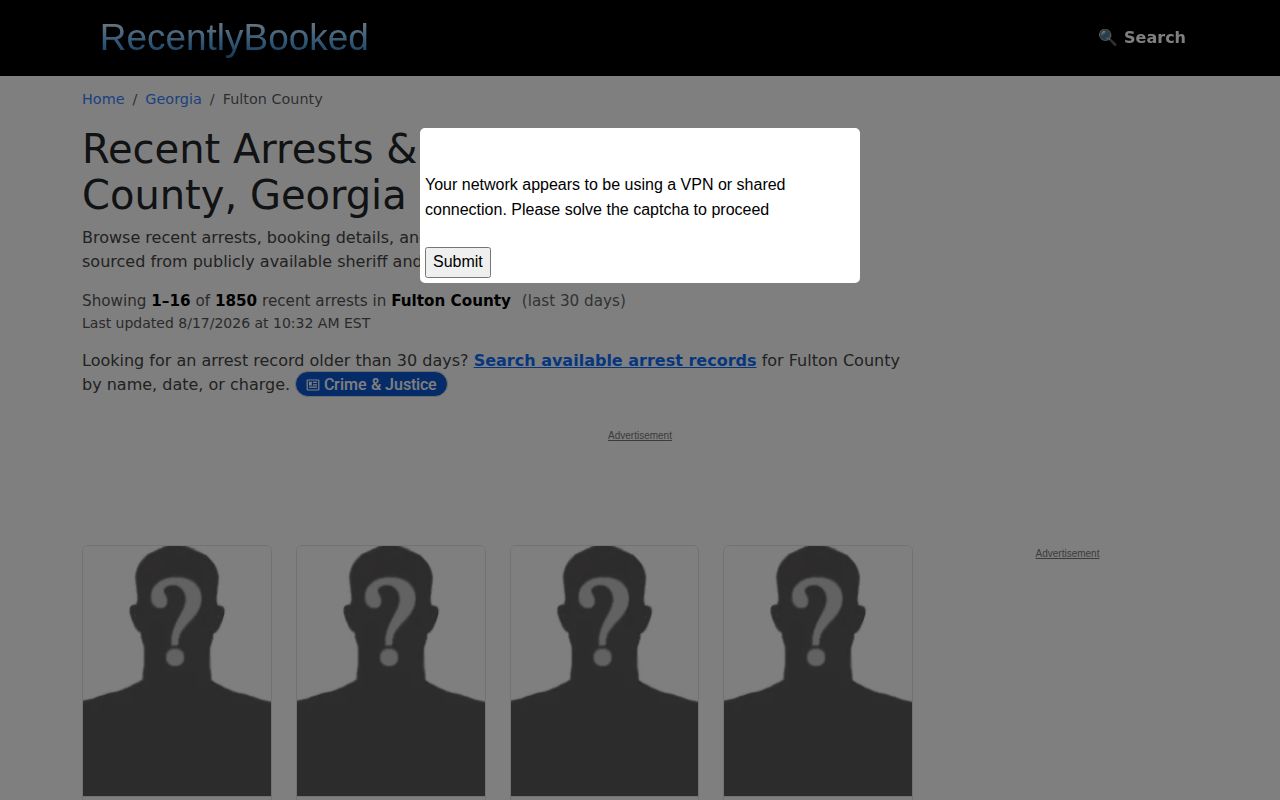
A refresh claim on an unofficial page carries no weight against the Sheriff's daily custody status, the records custodian, or the Clerk's disposition.
Fulton News Blotter Patterns
Fulton news coverage is selective by design. A metro newsroom might run several crime stories in a single day, while a hyperlocal outlet circles the same police beat with fewer reports. Rough Draft's Sandy Springs archive shows why scope and dates matter. Most of its visible entries are older, and those posts note that SSPD supplied only some of the reports. Agency press material often moves faster than the courts do. A warrant or arrest release can hit the web before a first appearance ever happens. A dismissal or amended charge that comes later may get little attention. The county's daily booking dataset helps here. It adds timing and tells you which agency made the arrest, though it won't match a name to a face. When a headline grabs you, verify it. Don't just copy it somewhere else. If a story credits a photo to a police agency, keep that claim attached to the outlet. A publisher's word doesn't confirm the image is current, that the charge still stands, or that the person remains in Fulton custody. Those facts live in the booking and court files.
Fulton City Crime Coverage
Coverage across Fulton's cities is uneven. Atlanta dominates metro news. Yet its city limits spill into DeKalb County, and ACDC handles certain city matters on top of that. South Fulton runs its own police department with a separate records-support channel. No complete city arrest feed could be confirmed there. Sandy Springs offers an incident and crash portal plus older Rough Draft blotter items. It has no current booking-photo feed.
A story can name the city and skip the detention destination entirely. For Atlanta, figure out the arresting agency first. Was it a state offense routed to Fulton or DeKalb? Or a city matter held at ACDC? In South Fulton and Sandy Springs, go to the police records office for the incident report. Check FCSO for county custody if the person was delivered there.
The city pages for Atlanta, South Fulton, and Sandy Springs lay out these local distinctions next to the shared county path.
Fulton Crime News After the Arrest
News stories usually stop at the arrest. The first story is time-sensitive, so reporters move on. Court records keep going. Fulton Clerk eServices points to separate Magistrate/State and Superior portals, and the later docket entries there can show bond orders, amended charges, hearings, pleas, diversion, dismissal, nolle prosequi, acquittal, or a final sentence.
Match carefully before tying a story to a case. Confirm the name, case number, court, and date all line up. A near-identical name, or one photo copied across several publishers, can produce a false match fast. Also remember that a missing public record isn't always a missing case; if the matter is restricted, sealed, juvenile, or otherwise exempt, the law itself may be the reason nothing appears.
Keep the pieces straight. A story is selected coverage, a booking is a custody event, a roster shows who is held right now, and only the court's filed disposition closes the matter. If coverage mentions state prison, the Georgia Department of Corrections offender search is the record that counts, not a county news page.